

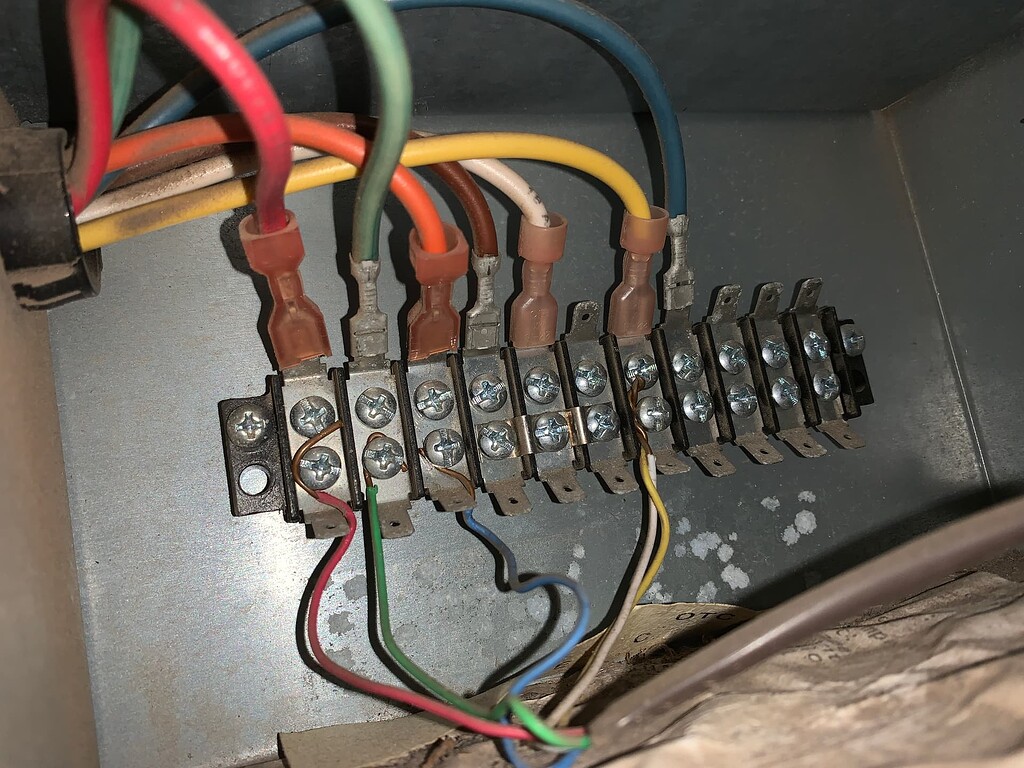
Pulling an aging thermostat off the wall of a home built decades ago is often an exercise in architectural archaeology. Beneath that familiar beige plastic box or iconic round dial, you rarely find the neat bundle of color-coded wires showcased in sleek smart-home installation guides. Instead, you are far more likely to encounter brittle, cloth-sheathed conductors poking through horsehair plaster, or a sparse four-wire bundle that looks completely alien compared to modern wiring diagrams.
The central source of confusion in almost every retrofit is the missing blue or black wire intended for the terminal labeled “C.”
Packaging for contemporary connected thermostats frequently touts effortless installation in thirty minutes or less. However, once you unpack the hardware and inspect your existing wall plate, reality sets in. Do you genuinely need a dedicated common wire to run a modern digital thermostat in an older home, or is it possible to bypass this requirement without endangering your heating and cooling equipment?
The candid answer is that while you can occasionally get away without a physical C-wire running through your walls, your thermostat unquestionably needs a stable, continuous source of electricity. Understanding why this wire exists, how your heating and cooling system uses power, and what workarounds are genuinely reliable will protect both your comfort and your HVAC budget.
What the C-Wire Actually Does
To understand why older homes lack this connection, you have to look at how traditional heating and air conditioning controls were built. For most of the twentieth century, residential thermostats were purely mechanical switches. Many relied on bimetallic coils that expanded or contracted with room temperature, tilting a tiny glass bulb of mercury to physically bridge an electrical contact.
These legacy switches did not need electrical power to think, connect, or glow. They operated entirely as simple interrupt switches inside a 24-volt alternating current circuit originating at a step-down transformer inside the furnace or air handler.
In a standard four-wire heating and cooling setup, each wire serves a dedicated switching function:
-
The R wire (Red) brings 24-volt alternating current power up from the furnace transformer to the thermostat.
-
The W wire (White) routes that voltage back down to the furnace control board when the home calls for heat.
-
The Y wire (Yellow) sends the current to the outdoor air conditioner compressor contactor when the home calls for cooling.
-
The G wire (Green) energizes the indoor blower fan relay to circulate air through the ducts.
When a room cools down, the mechanical switch inside the thermostat closes, completing the loop between the red wire and the white wire. Current flows through the furnace relay, the burner lights, and once the room warms up, the switch opens, cutting the circuit.
Smart thermostats, by contrast, are compact computers permanently mounted to your wall. They feature illuminated liquid crystal displays, backlights, motion detectors, ambient humidity sensors, and Wi-Fi radios that broadcast continuous signals through plaster and drywall. None of those features can function on an interrupted circuit.
The C-wire, or Common wire, does not carry a signal for a mechanical function. Instead, it serves as the neutral return path directly back to the furnace transformer. When paired with the 24-volt red wire, the common wire creates a closed, uninterrupted electrical loop that delivers steady, dedicated power to the thermostat around the clock, independent of whether your furnace or air conditioner is actively running.
The Myth and Reality of Power Stealing
If you browse the marketing materials for certain popular smart thermostats, you will notice claims that their devices work seamlessly without a C-wire. These units rely on a technique commonly known as power stealing or power sharing.
Power stealing sounds like an elegant piece of modern engineering. When your HVAC system is idle, the thermostat sips an extremely faint trickle of current through the heating or cooling circuit—enough to trickle-charge an internal lithium-ion battery without passing enough amperage to trip the main furnace relay. When the system turns on to heat or cool the house, the thermostat captures a portion of the active current passing through the line to sustain its internal electronics.
In modern systems with tolerant microprocessor-controlled circuit boards, power stealing sometimes works without obvious symptoms. In older homes with aging mechanical equipment, however, it frequently triggers erratic, baffling malfunctions.
The primary issue is that vintage control boards and mechanical relays were never designed to accommodate stray current running through their circuits when idle. Homeowners who install a smart thermostat without a common wire often report strange symptoms within weeks:
-
A furnace that randomly clicks on and off in rapid succession, a destructive behavior known as short cycling.
-
A subtle, audible buzzing or chattering sound coming from the relay board inside the air handler.
-
An outdoor air conditioning compressor that continues to hum faintly even when the house is completely cool.
-
Mysterious error messages warning of network disconnection on freezing winter nights, precisely when the heating system has been running so long that the thermostat could not enter an idle state to recharge its internal battery.
Over time, this parasitic draw can prematurely burn out sensitive relays on your furnace or exhaust the non-replaceable internal battery of the thermostat itself, requiring you to replace expensive equipment well before its expected lifespan.
Inspecting the Wiring Hidden in Your Walls
Before purchasing adapters or calling an electrician, you should investigate what is actually hiding behind your current wall plate. In many homes constructed or renovated between the late 1970s and early 2000s, technicians pulled standard multi-conductor wire through the framing even if the original thermostat only required two or three terminals.
Turn off power to your furnace at the breaker panel, remove your existing thermostat faceplate, and inspect the hole where the wire sheath emerges from the wall. Gently pull a few inches of the outer brown or white jacket forward.
Very often, you will spot an extra blue, black, or brown copper lead that was stripped back, curled neatly around the main bundle, and tucked into the wall cavity because the installer had no use for it at the time.
If you locate an unused conductor, look inside the cabinet of your furnace or air handler where the low-voltage control board lives. If that same unused wire is visible at the other end of the bundle, connecting it to the terminal labeled “C” on the furnace board and the “C” terminal on your new thermostat gives you a true, factory-grade common wire without pulling new cable.
Proven Workarounds When No Extra Wire Exists
If pulling the wire bundle reveals only two conductors on an old steam boiler, or a bare four-wire cable on a split furnace system, you still have several proven methods to deliver reliable power.
Power Extender Kits and Multiplexers
Several reputable smart thermostat manufacturers now include or sell an accessory known as a Power Extender Kit or add-a-wire module.
These devices mount directly inside your furnace cabinet beside the control board. The kit acts as an electronic multiplexer: it takes four physical wires running through your walls and combines two control signals—typically the cooling signal and the fan signal—over a single copper lead using distinct electrical frequencies.
By consolidating those two paths onto one wire, the kit frees up a dedicated physical wire to serve as a pure 24-volt common return. Because the separation happens via solid-state circuitry at the equipment level, your heating and cooling equipment receives clean, stable switching signals while your thermostat enjoys continuous, uncompromised power.
The Fan Wire Conversion
If you have a four-wire system (R, W, Y, and G) and do not want to install an external multiplexer module, there is a traditional technique long favored by experienced field technicians: repurposing the green fan wire.
The green wire exists solely to allow you to switch your blower fan from “Auto” to “On” manually at the thermostat, running the fan even when no heating or cooling is needed. In practical daily life, very few homeowners run their circulation fan continuously.
By disconnecting the green wire from the “G” terminal at both the furnace control board and the thermostat wall plate, and landing that same green wire on the “C” terminals at both ends, you transform the fan wire into a dedicated common wire.
Your air handler will still turn the blower fan on automatically whenever your furnace fires or your air conditioner engages, because the control board handles that sequence internally. The only feature you sacrifice is the ability to run the fan independently for ventilation without heating or cooling the air.
Dedicated Plug-In 24-Volt Transformers
Older homes heated by two-wire systems—such as hydronic baseboard radiators, cast-iron steam boilers, or vintage gravity furnaces—face a unique hurdle. These systems generally have only a red and white wire, providing no spare conductor whatsoever to repurpose.
In these environments, a plug-in 24VAC transformer provides a straightforward solution. These small adapters plug into a nearby standard 120-volt wall outlet and run a thin, low-voltage wire pair up the baseboard to the thermostat location. One wire connects to the thermostat’s common terminal, while the second connects to an auxiliary power terminal.
This setup completely isolates the thermostat’s logic and screen power from the heating controls, allowing the smart thermostat to communicate with your boiler via dry contact switching while pulling operating juice directly from the wall receptacle.
Pulling Modern Multi-Conductor Cable
While adapters and circuit workarounds are effective, fishing new thermostat wire remains the permanent, gold-standard solution.
If your furnace sits directly below your thermostat in an unfinished basement, or if you have open access through an attic crawlspace, replacing that obsolete two-wire or four-wire line with modern eighteen-gauge, eight-conductor solid copper cable (18/8 wire) is often far easier than homeowners assume.
Having eight conductors not only provides an authentic, dedicated C-wire, but it also future-proofs your home for multi-stage heating, heat pump conversions, whole-home dehumidifiers, and modern variable-speed equipment.
A Crucial Warning on High-Voltage Electric Baseboards
When evaluating thermostats in older structures, you must verify the voltage of your heating system before touching a single screw.
Low-voltage systems operating at 24 volts represent the vast majority of central furnaces, boilers, and heat pumps. However, many older homes, additions, and rural properties rely on electric baseboard heaters powered by line-voltage systems operating at 120 or 240 volts.
Line-voltage thermostats use heavy, thick electrical wires connected directly to household mains. Connecting a standard low-voltage smart thermostat designed for a 24-volt C-wire to a 240-volt electric baseboard circuit will instantly destroy the thermostat, trip main breakers, and create a severe fire hazard.
If you see thick black and red wires secured with heavy twist-on wire nuts, or if the back of your thermostat lists high electrical ratings like 120VAC or 240VAC, you cannot use a conventional smart thermostat or a standard C-wire setup. You must instead install specialized high-voltage smart thermostats built specifically to handle line-level electric resistive loads.
Protecting Your Equipment for the Long Haul
Smart climate controls offer tremendous value in older properties, balancing historic drafts with precision scheduling, geofencing, and remote temperature monitoring. Yet the temptation to cut corners on the electrical side frequently leads to persistent system gremlins, unexplainable furnace lockouts, and unnecessary repair calls in the middle of winter.
You do not necessarily have to tear open your walls to run a brand-new cable, but your thermostat requires steady, uninterrupted power to operate reliably. Taking the time to hook up a genuine common connection—whether through an unused conductor, a power extender module, or a dedicated transformer—ensures that your modern smart hardware and your vintage heating system work in seamless harmony for years to come.